How it works

Your Platform From Product Setup to Sales Follow-Up

One platform connects what you sell, how the customer pays, what they receive and what you can follow up afterwards.

You can explore Lymonah free for 7 days without a credit card.

The platform journey

One path from setup to follow-up

The same account connects the product, its sales page, payment, delivery and the customer record. The details change by what you sell, but the operating path stays clear.

  1. Platform and brand

    Your account includes a platform address, pages under your brand and a workspace for the people who manage sales and content.

    • Platform address and connected domain
    • Brand, navigation and public pages
    • Team roles and permissions
    • One workspace for products and sales
  2. What you sell

    A course, digital file, membership or bookable session starts as a product with its details, price and availability.

    • Courses with chapters and lessons
    • Downloadable products and files
    • Memberships with recurring access
    • Sessions with availability and duration
  3. Sales page and checkout

    The buyer sees the offer, price and purchase details in one place, then completes payment without leaving your platform.

    • Published product page under your brand
    • Price, currency, coupons and bundles
    • Checkout shared across products
    • Payment methods chosen for your audience
  4. Payment and delivery

    A confirmed payment records the order and connects the buyer to the purchased product, membership or session automatically.

    • Automatic access after payment
    • Files, content or session details
    • A buyer record linked to each sale
    • Receipts and order status in one place
  5. Customers, orders and growth

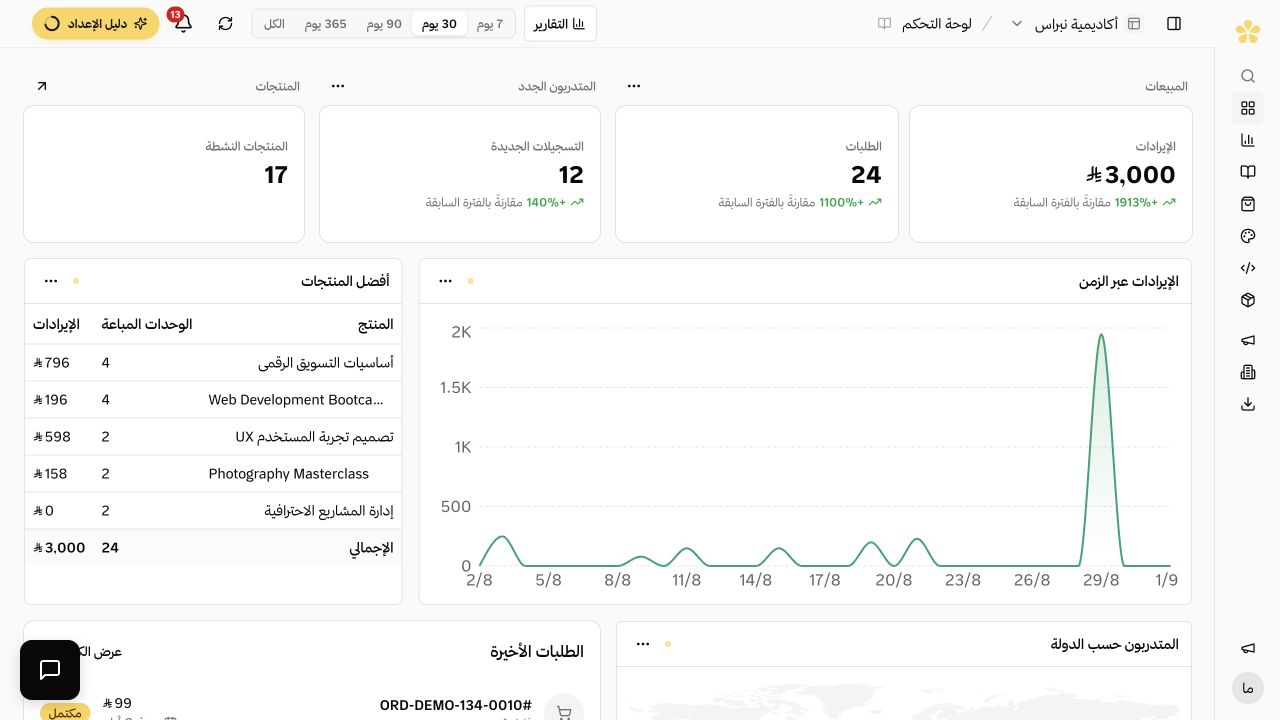
    Sales, customers, product performance and follow-up activity remain available in the same workspace after each order.

    • Orders, payments and revenue reports
    • Customer records and exports
    • Product performance and reviews
    • Segments, campaigns and automations
The customer side and the management side

The sale is one connected record

The customer sees a clear buying path. Your team sees the related product, payment and customer information without assembling it from separate tools.

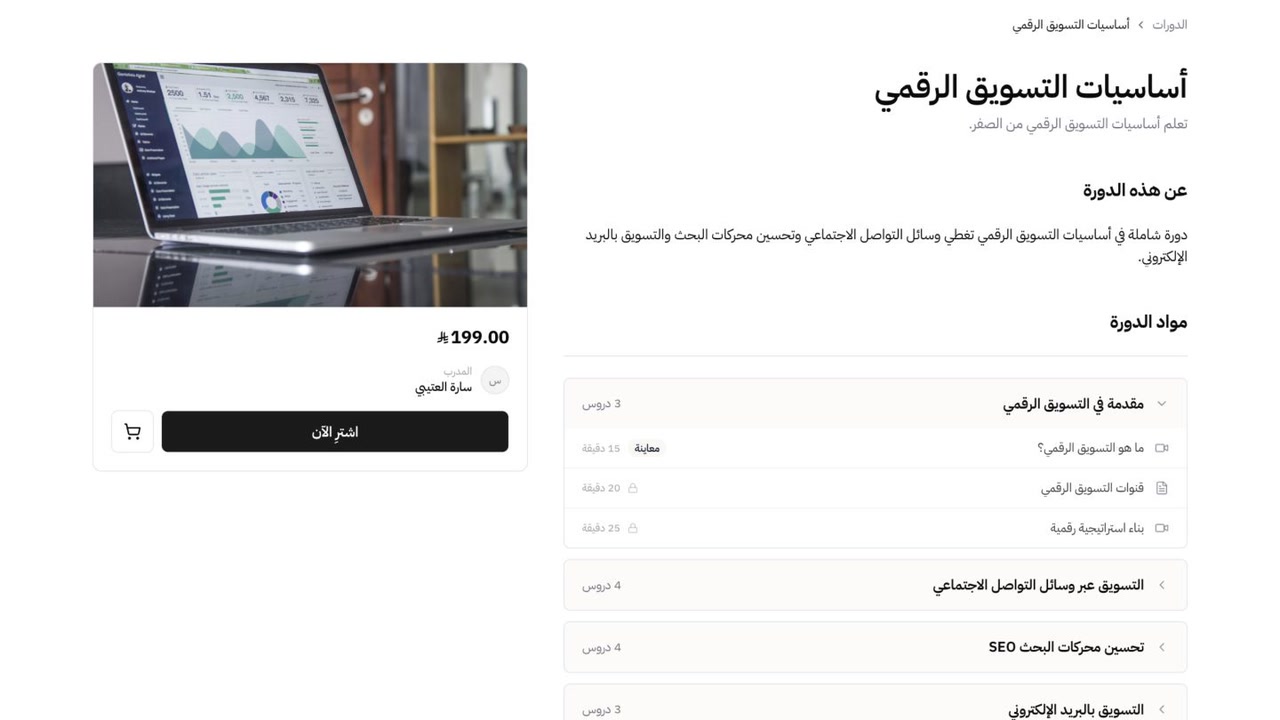
Nibras Academy storefront with product details and purchase action.

What the customer sees

The sales page, price, checkout and the next step after payment.
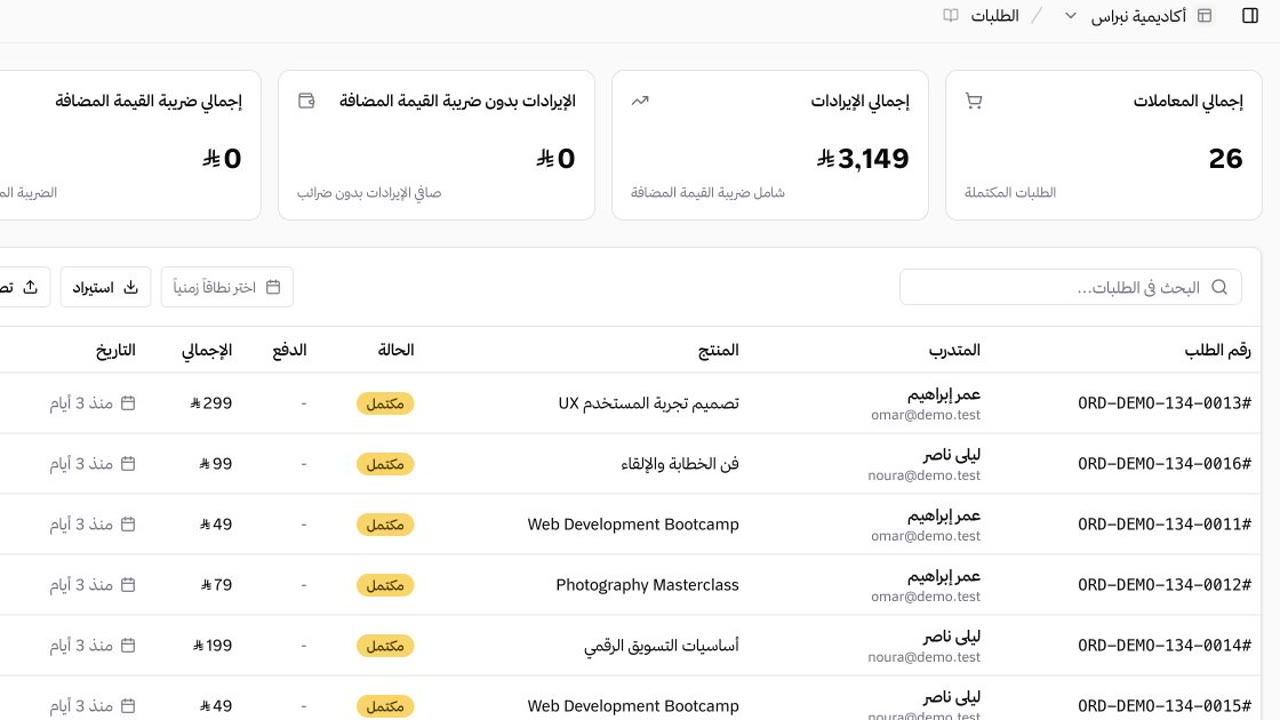
Nibras Academy orders screen with completed sales and buyer details.

What appears in management

The order, payment, customer record and product activity in one workspace.

Choose the selling path

The same operating path, shaped for what you sell

Each product type has its own setup and delivery details. The sales page, checkout, customer records and reporting stay in the same platform.

Paid the way your buyers already pay

Start on Lymonah Pay with no gateway of your own, or connect the one you already have. Either way the buyer sees the local schemes, the wallets and the instalment plans they expect.

Gateways

  • Lymonah Pay
  • Tap Payments
  • Tamara
  • Tabby
  • Stripe
  • PayPal
  • StreamPay
  • Bank transfer

Methods

  • mada
  • Visa
  • Mastercard
  • Apple Pay

Questions about the platform journey

Does every product use the same checkout?
Yes. Courses, digital products, memberships and paid sessions use one checkout. The available payment methods depend on the methods enabled for your platform.
What happens after payment is confirmed?
The order and customer record are created automatically. The buyer receives access to the purchased content, files, membership or session details according to the product type.
Can one platform sell more than one type of product?
Yes. A single platform can sell courses, files, memberships and sessions together. Each product has its own price, page and delivery settings.
What stays in the account after a sale?
The order, payment status, customer details and product activity remain connected. This makes sales follow-up, exports and future campaigns easier to manage.